Who is a 3D modeler?
-
June 28, 2023
-
0 Comments
These days, you just hear about new skills, talents, and concepts and wonder what they mean, good to say that technology has taken a thousand and one steps further. If you are hearing about 3D models or modelers for the first time, then, it was a good idea to open this article. However, it really doesn't cut it to talk about a 3D modeler without discussing the 3D model itself.
What is 3D modeling?
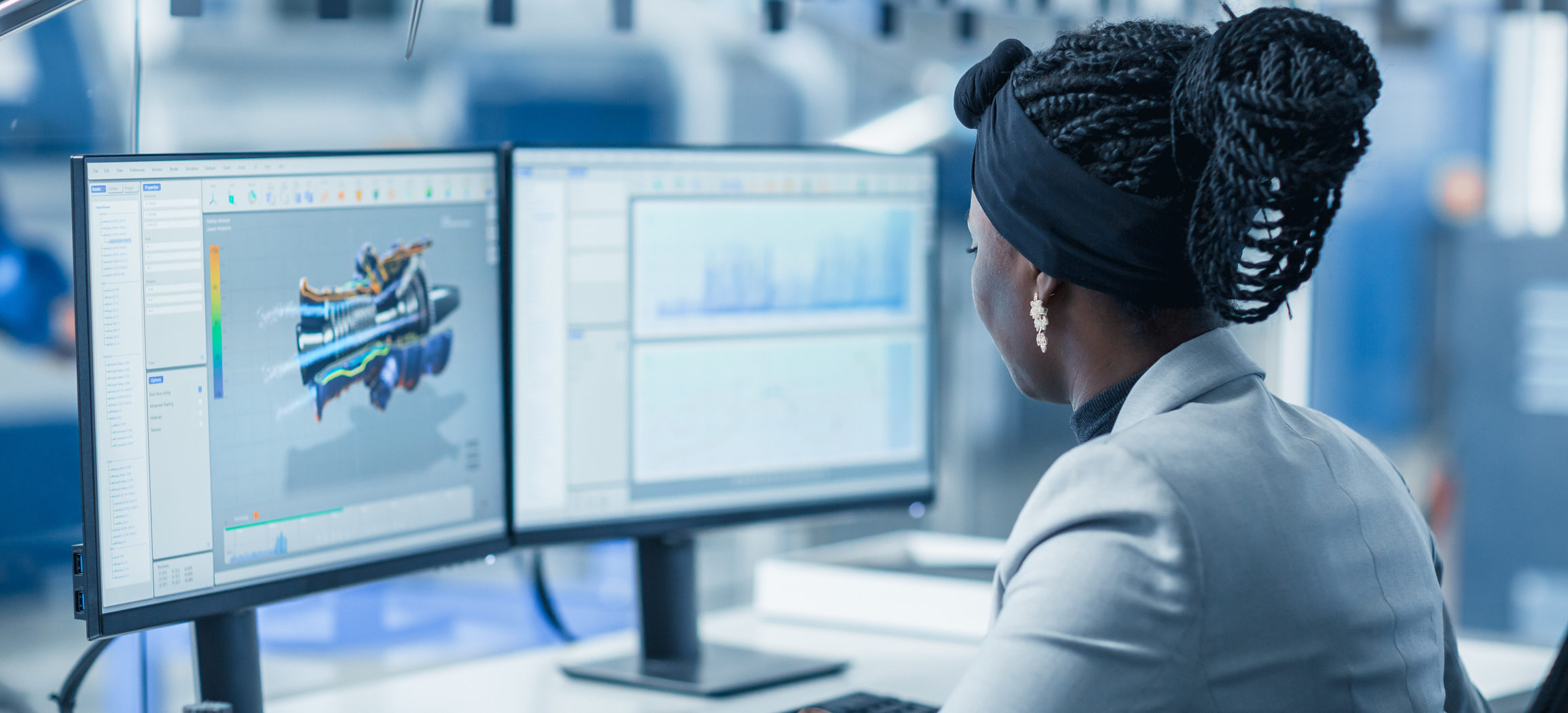
3D modeling is a procedure that involves the creation of a three-grid dimensional digital representation of any object or surface using relevant tools and software. Virtual objects are constructed by manipulating vertices, edges, and faces to build complex shapes and structures. These models can be viewed and tooled from different angles to achieve a more logical result. Also, this concept can be applied in different fields which include product design, gaming, animation, virtual reality, illustration, architecture, engineering, and more. So, if the idea indicates that 3D modeling is versatile, then it is. When 3D modeling produces a digital image or object, it should be able to undergo manipulation such that it can move; this signifies that animation and 3D modeling are interwoven.
Wondering how the objects are created? Remember that 3D modeling is dimensional? The points mapped on the 3D grid are connected to form polygonal shapes which can further be transformed into the surface of a particular object. To achieve the main body of the object, the surfaces are further refined and detailed by subdividing them. The subdivision enhances the surface of the object by increasing the level of detail needed to achieve the desired result. To arrive at the picture envisaged for the project, different modeling techniques can be used to sculpt and shape the object. Once the form of the object is achieved, textures, effects, colors, materials, and even lighting can be used to improve the look of the object.
A 3D modeler
A 3D modeler can also be referred to as a 3D artist or a 3D designer. They are experts who create 3-dimensional digital models for relevant and creative projects. They use software to sculpt, shape, texture, and build 3D models of products, images, and a lot more. Some of the responsibilities of a 3D modeler include the following:
Using relevant software 3D software applications to achieve proper graphics, visual effects, and animations.
Creating storyboards that visualize the idea of the project.
Applying textures and materials to enhance the visual appearance of 3D models.
Translating 2D models into visually appealing 3D models.
Interpreting project requirements into the desired look.
Meeting up with animators and designers to ensure that their models align with the project requirement.
Sculpting standardized 3D models.
Optimizing and cleaning models.
Related: Who is a VFX Specialist?
Skills for every 3D modeler
Creativity
Comprehension
Good eye for composition, photorealism, and lighting.
Deep understanding of model optimization, 3D modelling and scene ability.
Time management
Good communication skills
Collaboration skills
Project Management
Types of 3D Modeling
3D models are of varied types because they serve specific purposes and cater to the needs of different industries. Below are the types of 3D modeling:
NURBS (Non-uniform rational B-splines)
This type of model employs mathematical techniques to make curves and surfaces that will represent 3D images. If a 3D modeler is looking to create complex and organic shapes with smooth transitions, NURBS is suitable to achieve this idea. Also, NURBS makes it easy to access exact control over the shape of an object.
With NURBS, curves and surfaces are easily defined with control points, positions are easily adjusted and the desired shapes are also achieved with tangents. This model supports operations such as filleting, blending, and trimming which come in handy for creating more precise and detailed designs.
Solid Modeling
This type of 3D modeling does it perfectly for engineers and product designers and is also the most popular. It allows an artist to create detailed images and objects that can be rotated, modified, and manipulated to suit whatever project is at hand. Solid modeling works with a level of accuracy that helps to ensure compatibility, fit, and functionality. Also, an artist can employ solid modeling for ideas that include stress analysis, fluid flow analysis, and motion stimulation.
Polygonal Modeling
Polygonal modeling is closely knitted to meshing and is widely known for its versatility. This type of modeling helps artists to achieve 3D models by commencing with a simple shape to build vertices, edges and faces to form polygonal meshes. The level of control that polygonal modeling provides allows for detailed customization and refinement, enabling artists to achieve the desired picture or plan. Almost all 3D software supports polygonal modeling, hence, artists who want to focus on this type of 3D modeling do not have to bother about software compatibility.
Digital Sculpting
Digital sculpting is a complex procedure that requires that a 3D artist is proficient in applying software such as Zbrush or Mudbox. While anyone can decide to be a 3D modeler, without the knowledge of this software, it may be practically difficult to do this type of 3D modeling. To achieve digital sculpting, digital clays are subtracted or added depending on what result the artist is planning to get. The clay manipulation goes on and on until the target is met.
Parametric modeling
Parametric modeling makes it easy to change or modify the shape and condition of a model. This model provides designers with a more flexible and efficient workflow knowing fully well that they can adjust necessary parameters such as the size, shape, or position to meet the design intent. Also, parametric models can be programmed with logical rules and constraints that guide and automate the design process. This automation enables the designer to generate different versions of the model, perform optimization, or even duplicate the models. With parametric modeling, it is possible to create a bond between all dimensions to ensure consistency. Industries such as engineering and manufacturing have seen the light, therefore, most projects, lean towards parametric modeling.
Relevant Tools for all 3D modelers
If you read up till this stage, it means that you now have an idea of who a 3D modeler is and what the skill involves. If you would like to read more on the new emerging skills and concepts of tech, sign up on our website today to get the tea!
High Paying Robotics Jobs
How to Become a GOtv Agent in Nigeria
Recent Post
-
-
 WorkFlowsHR: the best HR software in Nigeria July 25, 2024
 -
-