Everything you Should Know About the Future of Work

-
January 05, 2023
-
0 Comments
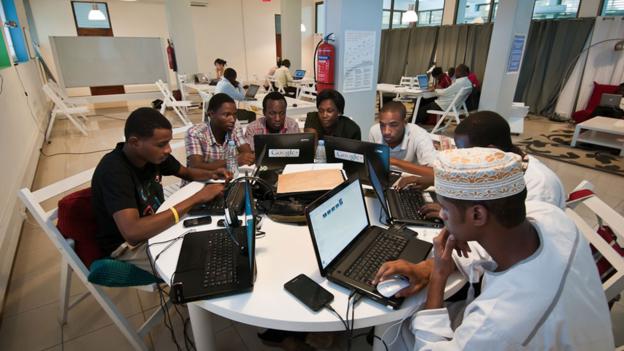
There is a lot of speculation about the future of work which makes it difficult to predict with certainty what the future will hold. Some experts believe that automation and artificial intelligence will lead to significant changes in work, while others believe that the impact of these technologies will be more limited. The future of every work will likely involve a combination of new technologies and changing demographics, such as an aging population and the increasing participation of women in the workforce. Some of the trends that are likely to shape the future of work include flexible work arrangements. Like the gig economy, remote work, and the increasing importance of skills such as critical thinking, problem-solving, and collaboration.
What is the Future of Work?
The future of work refers to the way that work and employment will change in the future. Due to advancements in technology, globalization, and other factors. Some of the key trends that are expected to shape the future of work include the increasing use of automation and artificial intelligence,The rise of remote work and flexible work arrangements, the increasing importance of soft skills, and the blurring of the lines between work and leisure. These changes may have a wide range of impacts on workers, employers, and society as a whole. But people need to be aware of and prepared for these changes.
Ways in Which Workplaces can change in 2023 and beyond
No one can predict the way everything will move. But here are some changes that can hit different workplaces in 2023 and beyond:
Experience and longevity won't matter as much as upskilling and digital proficiency.
In the future, cognitive work will be the most valuable. Employees will need to use critical thinking, innovation, and ongoing digital upskilling to solve complex challenges. To establish new ventures in the digital economy, business models, ideas, and information must be constantly expanded, combined, and changed. Employees must continuously refresh their digital acuity to meet these demands. HR will need to establish and promote a culture of ongoing learning if knowledge acquisition and transparency are to become regular elements of organizational operations.
Having employee data will increase
The monitoring of employee well-being and workplace productivity has gained more attention as a result of hybrid employment. According to a Gartner survey, 16% of companies are increasingly employing technology to keep an eye on their workers. Examples include tracking computer usage at work, monitoring employee emails, and virtual clocking in and out. Some companies measure productivity to better understand the employee experience, while others focus on employee engagement and well-being.
Technology will be able to tell when someone has worked too hard. Also, when they need to take a break by tracking their biorhythms, nutritional needs, and exercise requirements. Leaders will leverage information and technology to create a hybrid workplace that accepts all employees' job preferences. But not only those who are hired continuously or have advanced digital capabilities.
Our coworkers will be intelligent machines.
More and more commonplace, intelligent machines are performing previously human-only activities as well as previously unthinkable feats for machines. Businesses will begin to expand the capabilities of intelligent devices, software, apps, and avatars. Employees will develop personal toolkits of virtual doppelgangers, or virtual counterparts, using artificial intelligence (AI) tools and technologies that are more practical for their individual or team-based activities.
Furthermore, by utilizing cloud communities, open programs, and personal virtual assistants, users would be able to take their workplaces with them wherever they go. The working style of employees will eventually be one of extreme digital dexterity. Growing demands for a more automated workplace have led to a deadly mix of people and technology.
Proactive executives must learn how to implement plans that will be revived by the regular application of AI, smart software, and robotics. To achieve a competitive edge, high-performing personnel should be encouraged to create and disseminate AI tools or specialized portfolios of applications, tools, and cutting-edge technologies. The threshold for outstanding digital dexterity will rise as a result. This can also be one of the predictions towards the future of work.
People will work with purpose and passion and not for money
Employees want to significantly impact society, and they will do so earlier rather than later in life. People will actively seek out opportunities to link the significance and effect of their work to their goals, interests, and personal missions. Reading other people's social media posts will motivate them to participate more and make a difference in social innovation and equity.
Along with offering higher pay, savvy businesses will attract more employees by allowing them to make a real difference in the world. By encouraging staff to share their personal stories, triumphs, and involvement in various social causes, you can create a narrative that connects and increases engagement.
CEOs and HR leaders must work together to make sure that each employee's work-life balance fluctuates as their workload, availability, and life stages change. Knowing what will happen in the future will make HR leaders' jobs much easier.
There will be challenges with having a remote work-life balance.
To progress their talents and handle better projects, independent or remote workers will inevitably take on more duties, possibly to the point where they feel as though they are working nonstop. As a result, workers will try to put life before work because finding a work-life balance won't cut it anymore.
The future of work-life balance does, however, have some gray areas. As technology closes the gap between geographically dispersed people, it tears apart relationships and civilizations. Many employees won't establish the same social networks at their places of employment. This is because of the remote nature of the work, which could result in issues with disengagement and loneliness.

Future of workplace trends for 2023
It's difficult to predict with certainty what the future of work will look like in 2023. As it depends on a variety of factors such as technological advancements, economic conditions, and social trends. However, there are a few trends that are likely to continue or accelerate in the coming years:
- Remote work: The COVID-19 pandemic has led to a significant increase in remote work. Many companies will likely continue to offer remote work options even after the pandemic ends.
- Artificial intelligence and automation: AI and automation are likely to play a greater role in the workplace, potentially leading to the automation of certain tasks and the creation of new job roles focused on managing and implementing these technologies.
- Upskilling and reskilling: With the rapid pace of technological change, it will be important for workers to continuously learn and adapt to new skills. This could involve reskilling for new roles within their current company or upskilling to stay competitive in their current role.
- Flexibility and work-life balance: As the boundaries between work and personal life continue to blur, there will likely be an increased focus on work-life balance and flexibility in the workplace.
- Diversity, equity, and inclusion: There is likely to be a continued focus on diversity, equity, and inclusion in the workplace as companies strive to create more inclusive and representative workforces.
Future skills for the workplaces
Future skills are crucial since they can boost your success and help you have better career chances as new professions are created by digital and artificial intelligence (AI) technology. Developing and improving these talents is beneficial for any career you may be considering.
Here are some crucial future of work skills to advance your career:
Analytical thinking
Companies will continue to seek out those with analytical problem-solving skills. Analytical thinking can assist you in classifying data into manageable groups to improve data interpretation and reach reliable findings. When making decisions, analytical thinking is used to look for patterns, generate ideas, evaluate data, incorporate new knowledge, and weigh various options and variables
This ability to conduct research, solve problems, and identify trends is essential to many professions. Being more perceptive of your surroundings and attempting to comprehend how things function are two ways to aid in the development of analytical thinking abilities. You'll spend less time testing and more time resolving issues as your industry knowledge grows.
Active learning
Active learning is a teaching method that makes use of activities to keep students completely absorbed in the information they're attempting to learn. You can build abilities and learn how to do job tasks fast by being an active learner. Employers will value you for being versatile because it may be simpler to train you.
By engaging yourself in issues through discussion, role-playing scenarios, and problem-solving to get a thorough comprehension of the material, you can increase the likelihood of developing new skills.
Emotional and social intelligence
Emotional and social intelligence are the only human-specific traits that cannot be replicated by digital technology or artificial intelligence.
These characteristics are essential in particular industries. Healthcare positions, for instance, are in high demand, illustrating how some roles will always require a human aspect. Working closely with people will probably be a large part of your future employment, so you'll need to be empathetic, able to work with others, and have strong communication skills.
Strong communication skills
The ability to communicate will still be in demand for employment in the future. Being able to communicate successfully entails being able to decipher the meaning behind the spoken and written language. Working together with coworkers and attaining organizational objectives, such as raising manufacturing output or sales, depend on effective communication.
High creativity skills
The capacity to come up with original ideas and shift perspectives to view things in new ways is a necessary component of creativity. It can be a helpful tool for coming up with new concepts, boosting productivity, and creating answers to challenging issues. Another talent that can be used for any job function in any business is creativity.
If you have the option, join a team with individuals who think differently than you do. By doing this, you can expand your perspective and discover fresh approaches to your career, as because the future of work still remains unpredictable.
Strong Critical thinking and analysis
Analyzing information to fully comprehend an issue or topic is the act of critical thinking. The steps of the critical thinking process often entail gathering facts and data, posing deliberate queries, and examining potential answers. Problem-solving skills include the ability to operate both independently and collaboratively.
Increase your technical or industry-specific knowledge to assist you more quickly spot issues as a way to develop your critical thinking abilities. You can think about enrolling in more classes in your field that stress critical thinking and analysis.
Digital literacy
An increasingly crucial ability as workplace technology develops is digital literacy. Understanding the lingo used by social networks and mobile applications is a requirement for digital literacy. Employers might favor candidates who are technologically proficient and well-rounded.
Consider enrolling in computer science and information courses or attending workshops on cutting-edge technologies like artificial intelligence to strengthen your digital abilities.
Innovative skills
To contribute to an organization's performance in innovation, executives and their staff must have the crucial skills necessary to generate new and enhanced strategies, capabilities, processes, and services. They enable you to draw on your prior expertise to generate novel ideas that are advantageous to both you and your team.
Interpersonal skills
Active listening, reliability, compassion, verbal and nonverbal communication, flexibility, and dependability are examples of interpersonal skills. You can succeed in your profession by developing these talents, which can assist you in creating positive relationships.
By becoming more self-aware and asking for feedback on your actions and interactions with others, you can develop your interpersonal abilities.
Self-management
Enhancing your performance and achieving your professional goals can be successful by developing excellent self-management skills. The capacity to control your ideas, feelings, and behaviors both at work and in your personal life is self-management. It comprises the capacity to manage your time and stress as well as the structure, ambitious, flexible, and organized. You can therefore take the initiative to accomplish your goals and inspire yourself to continue working hard.
By employing time management techniques and establishing objectives for yourself, you can improve this skill. Also, think about setting SMART objectives. The letters SMART, which stand for specified, measurable, achievable, relevant, and time-based, are an acronym. This means that each goal you set must satisfy these requirements.
Technology monitoring skills
Technology monitoring abilities will be in demand as the use of automation, machine learning, and AI grows. There will be more chances to oversee and control technology remotely from various areas ensuring that it is always online and operational. You need to know when and what caused this technology to go offline. So that you can fix it when something happens to take it offline.
Technology design
Every industry uses technology in the workplace, thus learning technology design skills is advantageous. These abilities include the capacity to design, comprehend, and enhance digital user experiences. They are used to design software, make websites and apps, map the user experience, and enhance how people interact with technology. Understanding Technology design will help you adapt to the next future of work.
Ideation and Thinking
To address upcoming commercial and technological challenges, the capacity to think through ideas will be in high demand. The ability to move rationally and coherently from a hypothesis to a conclusion is known as reasoning. Both the capacity to characterize a problem accurately and the ability to discover a solution are necessary for problem-solving abilities.
Ideation, on the other hand, is sometimes equated with creativity. It refers to the capacity to generate novel concepts and methods, test them, and subsequently find solutions to issues. Many of the qualities necessary for analytical thinking, originality, creativity, and initiative are shared with them.
Leadership abilities
Candidates with leadership traits including accountability, initiative, and integrity are frequently preferred by employers. These abilities help with teamwork, goal-setting, and time management. For each employment capacity, having leadership abilities is beneficial.
Future firms will also benefit from opinion leaders, often known as social influencers. They are prized for their capacity to sway others, frequently assisting in lifestyle selections and online or offline purchasing decisions. They have an audience or fan base that values them as a trustworthy resource for knowledge about their interests.
Innovation skills
To contribute to an organization's performance in innovation, executives and their staff must have the crucial skills necessary to generate new and enhanced strategies, capabilities, processes, and services. They enable you to draw on your prior expertise to generate novel ideas that are advantageous to both you and your team.
Final Words on the future of work
No one can predicts the future of work, but one thing is sure, a lot of things will change over time. As we move up in technology, and advancement in almost everything, make sure your career is not lagging. This is because if any changes enter the work flow, you will be able to blend. Become better in the skills that will help you in the future. For more career tips, you can check HERE. If you need some articles on salaries, check HERE. We have so many job updates, that you can check HERE as well.
How To Become A Kuda Bank Agent
Konga Jobs | Apply Now
Recent Post
-
-
 WorkFlowsHR: the best HR software in Nigeria July 25, 2024
 -
-